

For years, cat parents looking for natural ways to support their kitties had very few resources. There was not a lot of information about feline nutrition, feline supplements, and especially herbs and medicinal mushrooms for cats.
That is one of the reasons this conversation matters so much.
We sat down with clinical herbalist and best-selling author, Rita Hogan to talk about herbs, mushrooms, and how these natural tools may support feline wellness. It was an eye-opening conversation, especially for cat parents who have never been introduced to herbal support before.
Cats are not small dogs. They have their own unique biology, their own sensitivities, and their own wellness needs. But just like us and other animals, they can benefit from naturally supporting the body systems that keep our cats balanced and resilient.
Why Herbs and Mushrooms for Cats Matter
Herbs and mushrooms do not replace veterinary care.
They support the body’s natural systems so your cat can maintain balance, resilience, and overall wellness.
This support may help:
-
Maintain healthy liver function
-
Support kidney and urinary health
-
Promote a balanced inflammatory response
-
Strengthen immune system balance
-
Support nervous system regulation
-
Improve overall vitality
This matters even more for indoor cats.
Most cats live indoors, move less, and face ongoing exposure to environmental stressors, processed foods, and household toxins. Over time, this can place added strain on the body.
A proactive approach can make a real difference.
Supporting the Systems That Support Your Cat
Instead of focusing only on symptoms, herbs and mushrooms support the systems working behind the scenes.
Liver Support
The liver plays a key role in detoxification, metabolism, and overall health.
Herbs like milk thistle help support liver function and assist the body in managing oxidative stress.
Kidney and Urinary Support
Kidney and urinary health issues are epidemic for our cat population.
Cats naturally have a low thirst drive, which means consistent support essential – starting with a good quality, moisture-rich diet.
Nettles provide minerals and help support kidney and urinary function.
Lymphatic and Circulatory Support
Indoor lifestyles can lead to what herbalists call stagnation, or reduced movement within the body.
Supporting circulation, lymphatic flow, and elimination helps maintain balance and overall health.
Why Stress Is a Major Factor in Cat Health
Stress plays a much bigger role in feline health than most people realize.
Cats respond quickly to changes in their environment. Construction, new pets, schedule shifts, travel, and even emotional tension in the home can trigger stress.
Stress affects more than behavior. It can impact digestion, inflammation, immune balance, urinary health, and overall well-being.
When you support the nervous system, you support the whole cat.
Catnip: More Than Just a Toy
Most people see catnip as something fun or stimulating – but Rita points out catnip also provides some powerful nervous system support.
It may help:
-
Promote relaxation
-
Reduce tension
-
Support emotional balance
-
Help cats adapt to change
This makes it especially helpful for indoor cats.
Common Herbs for Cats
Each cat is different, but some herbs are commonly used in feline wellness.
Milk thistle supports liver health and detox pathways.
Nettles provide minerals and support kidney and urinary function.
Turmeric supports a healthy inflammatory response.
Catnip supports the nervous system and helps reduce stress.
Moringa provides nutrients, antioxidants, and mineral support.
Always remember that cats are individuals. Their needs vary based on age, lifestyle, and overall health.
Medicinal Mushrooms for Cats
Medicinal mushrooms also play an important role in natural wellness.
They help support immune modulation – meaning they help balance the immune system instead of overstimulating it.
Reishi supports stress response, immune balance, and overall resilience.
Chaga provides antioxidant support.
Oyster mushroom supports overall system function.
Cordyceps can be more stimulating, so it may not suit every cat.
Choose mushrooms carefully and introduce them slowly.
How to Safely Use Herbs and Mushrooms for Cats
Cats respond best to a gentle approach. Start with a small amount. Introduce one new item at a time. Monitor appetite, behavior, and litter box habits. Increase slowly if your cat tolerates it well.
Safety Considerations
Some herbs are not appropriate for cats. Dosage and preparation matter. Product quality also matters. It’s important to consult a qualified practitioner when possible.
A More Proactive Approach to Cat Health
Herbs and mushrooms shift the way we think about health. Instead of reacting to problems, we can ask better questions.
How can I support my cat before issues develop?
How can I reduce stress and improve balance?
How can I help my cat thrive?
This is where natural wellness shines.
FAQs: Herbs and Mushrooms for Cats
Are herbs and mushrooms safe for cats?
Some are safe, but not all. Safety depends on the ingredients, dosage, and the individual cat.
Can herbs replace veterinary care?
No. They support wellness but do not replace proper medical care.
What is the best herb to start with?
Catnip is a gentle option that supports stress and nervous system balance. You can also try an organic herb garden for cats – full different herbs that are all safe for cats.
Are medicinal mushrooms safe for cats?
Many are safe when used properly, but quality and dosage matter.
How do I introduce herbs or mushrooms?
Start small, introduce one at a time, and increase slowly while monitoring your cat.
Can herbs help with stress?
Yes. Certain herbs support relaxation and help regulate the nervous system.
Breathe
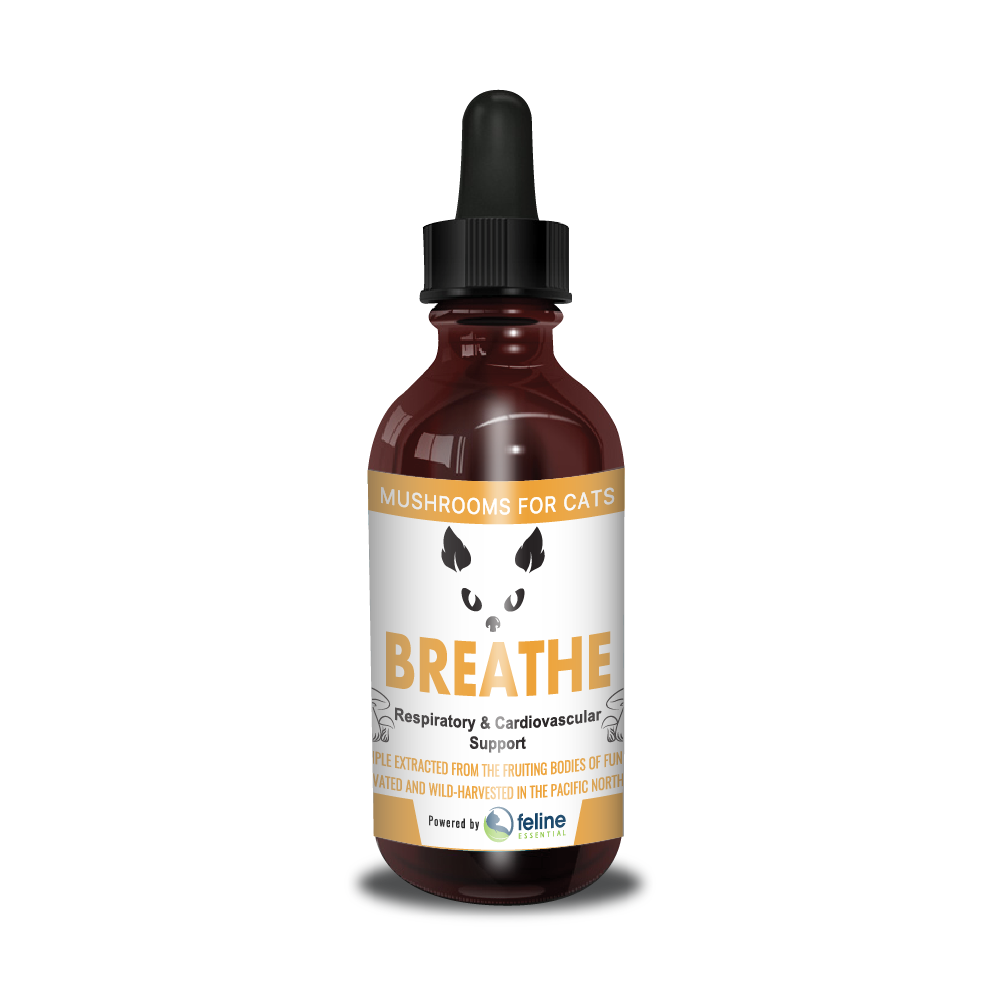

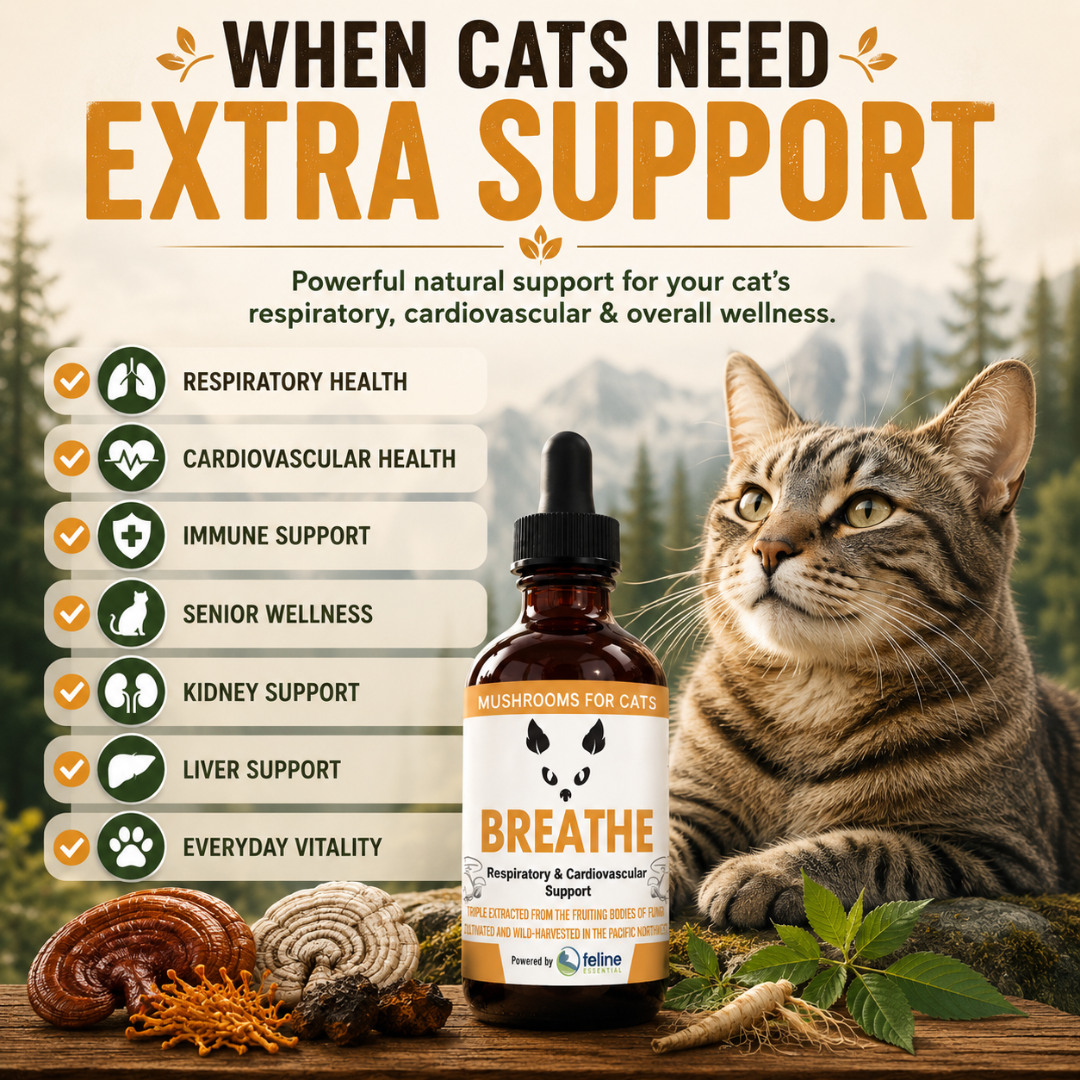
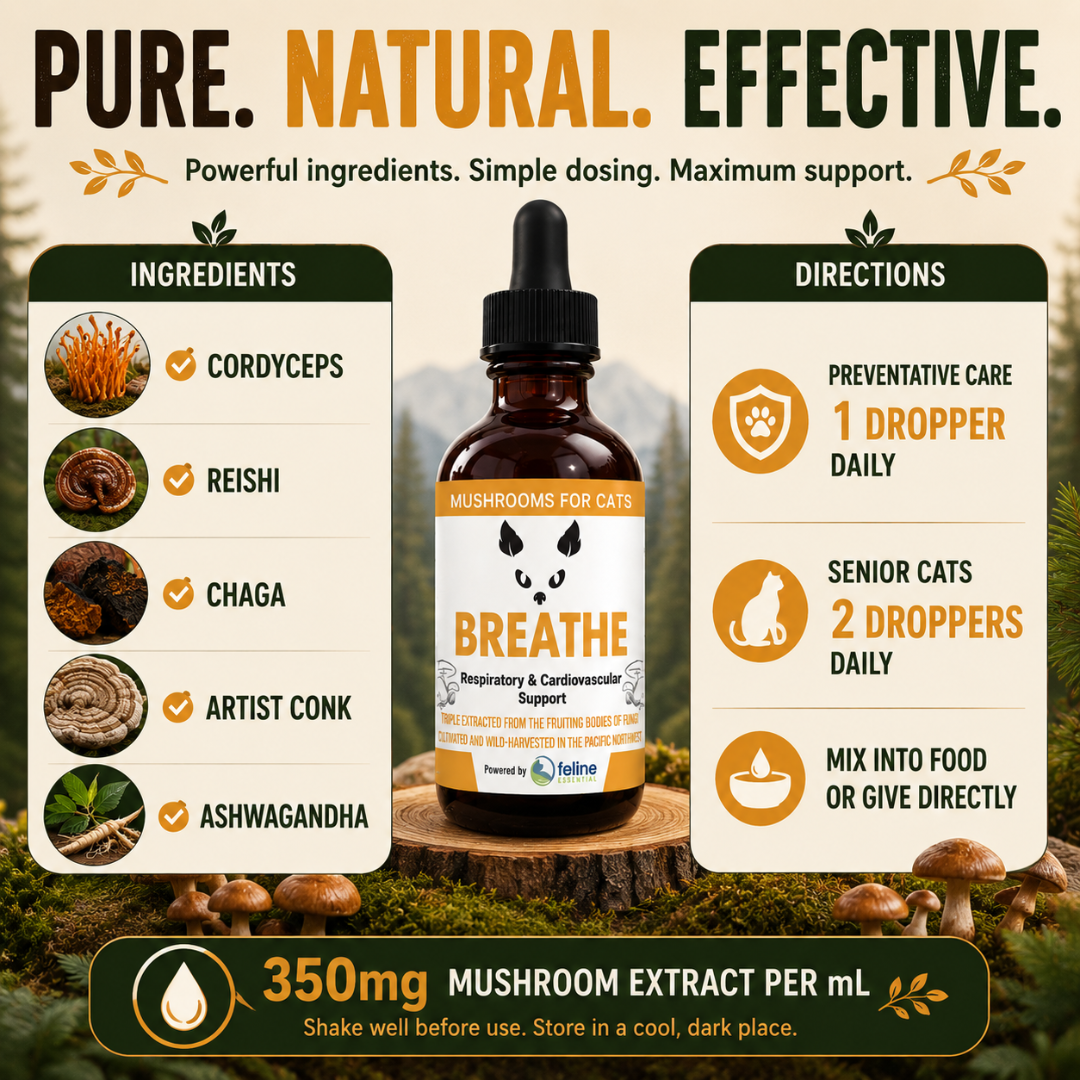





MycoCat Breathe is a premium respiratory and cardiovascular supporting mushroom tincture. This tincture is a water extracted blend of Cordyceps, Reishi, Artist Conk and Chaga, with Ashwagandha preserved in organic vegetable glycerin. Cultivated and wild-harvested in the Pacific Northwest, these mushrooms offer the powerful support your cat needs.
Purrfect for:
- Heart health
- Respiratory health
- Immunity health
- Kidney health
- Liver health
- And Much More!
$49.99
In stock (can be backordered)