
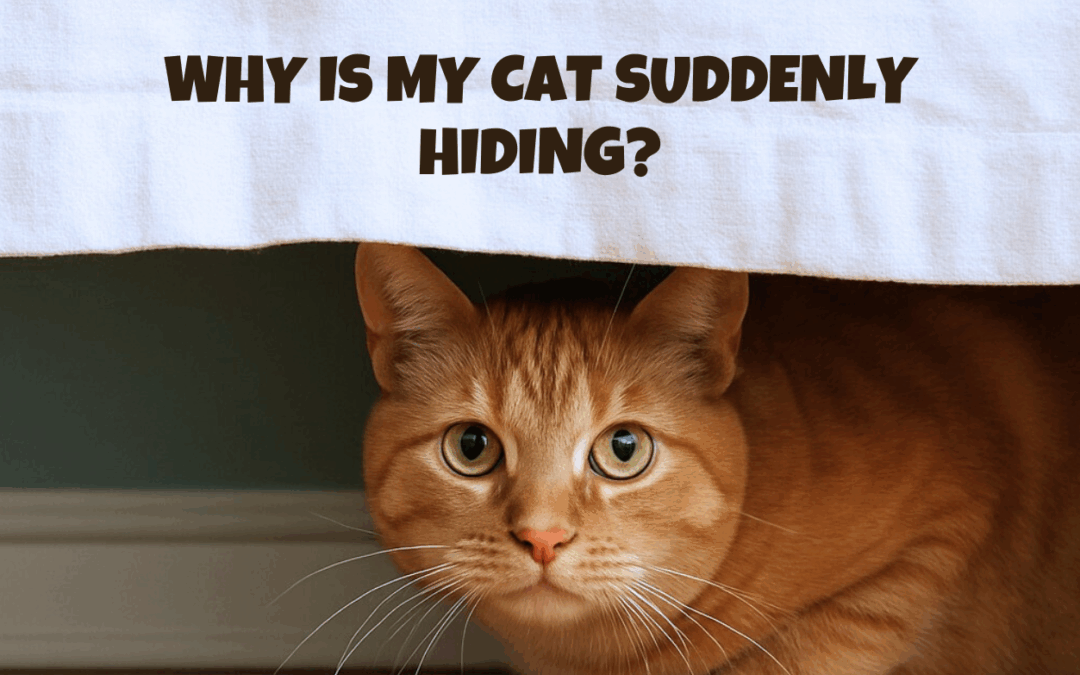
Has your cat started hiding out of nowhere? Sudden skittish behavior in cats can be confusing – and honestly, a little heartbreaking – especially when you’re not sure what triggered it. Your cat is communicating something important, and once you know what to look for, you can help them feel safe again.
Let’s break down the most common causes behind sudden fearfulness in cats and how to support them through it.
1. Always Consider Health First
Cats hide pain and illness by nature. It’s a deeply ingrained survival instinct: in the wild, injured or sick animals are vulnerable to predators. And since our domestic cats share 95.6% of their DNA with tigers, those instincts are very much alive… even inside our cozy homes.
If your cat is suddenly less social, darting away from touch, or retreating to quiet corners, it could be because they’re not feeling well. Pain, nausea, dental issues, mobility problems, infections, and even internal discomfort can trigger cats hiding.
What to do:
• Check for changes in appetite, litter box habits, or movement.
• Do an at home wellness exam and rub them down to see if something seems tender.
• If the behavior persists beyond a day or two or you notice any physical symptoms, reach out to your vet or your integrative veterinarian right away.
Health should always be your first stop.
2. Behavioral or Emotional Triggers
If your cat’s health is cleared, the next possibility is behavioral. Cats can be incredibly sensitive to their environment. Sometimes something scares them, and… they just can’t shake it.
A loud noise, a new smell, a stranger in the house, a different routine – even a new appliance or piece of furniture – can cause some cats’ nervous systems to fire into high alert.
Other cats may become skittish when:
• Another pet is asserting dominance
• Something outside the window startled them
• There’s stress or conflict in the household
• A scent brought in from outside triggers their “intruder alert” instinct
Cats are emotional creatures, and when the energy in the home shifts they feel it in their bones.
If you are stressed, anxious, or overwhelmed, your cat may mirror that energy. Our kitties are deeply attuned to us. Your tension becomes their tension.
What to do:
Create a calm environment. Speak softly. Offer hiding spots that still feel connected to the home – like a covered bed in the living room instead of isolating them in a closed room. Give them time, space, and reassurance.
If you cannot seem to help your cat’s fear, reach out to The Cat Behaviorist for help.
3. Yes… Sometimes Cats Really Do See What We Don’t
This may sound woo-woo to some, but many guardians swear their cats react to things we can’t see. Cats are highly perceptive, energetically sensitive beings. Their senses pick up on shifts, spirits, presences, or visitors from the other side – if you’re open to that.
If your cat suddenly stares into corners, tracks something across the room, or hides as if someone unexpected walked in, it may simply be that they’re sensing something beyond our human perception.
And honestly? It’s not always a bad thing. Sometimes it’s a reminder that we live in a world far bigger than what we physically observe.
How to Help Your Cat Feel Safe Again
• Keep routines predictable
• Offer extra playtime to rebuild confidence
• Use calming tools if needed (herb gardens, flower essences, calming supplements, energy work)
• Lower your own stress – your energy sets the tone
• And most importantly, give them patience
Your cat isn’t being dramatic or “mean”… they’re responding to something real, whether physical, emotional, or energetic. When you honor that, you help them come back into balance with trust.

Recent Comments