


Cats are masters at hiding pain.
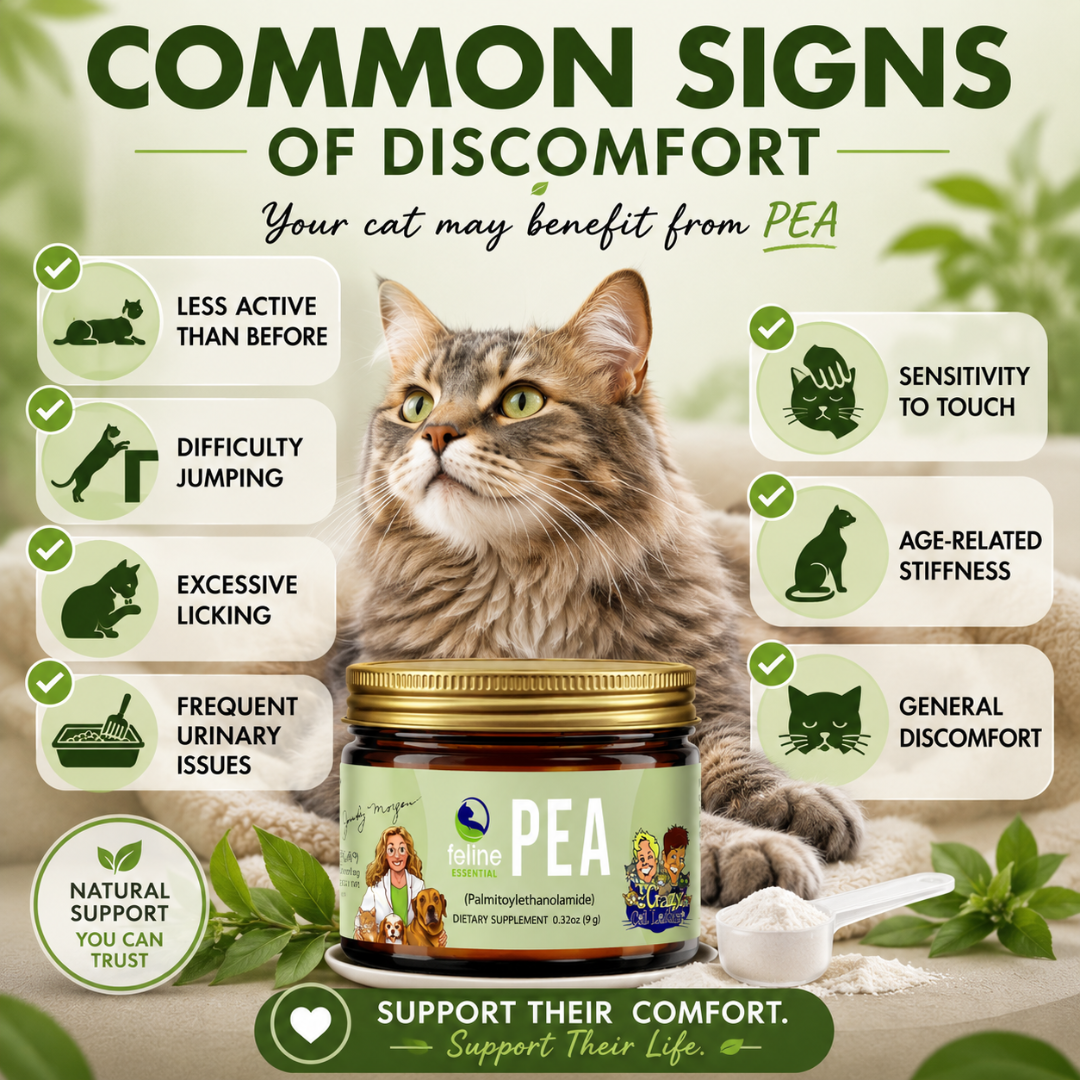
It’s one of those traits that served them well in the wild – but makes our job as cat parents a whole lot harder. A cat in pain may not cry, limp or make it obvious that something hurts. Instead, they may sleep more, stop jumping onto their favorite spot, groom less (or excessively), become irritable, hide, hesitate before using the stairs or simply seem a little “off.”
And pain isn’t always caused by an obvious injury.
Inflammation, an overactive nervous system and even changes in the way the brain and nerves process pain signals can all contribute to discomfort, especially when pain becomes chronic.
That’s where an interesting natural compound called PEA (palmitoylethanolamide) comes into the conversation.

Not All Pain Is the Same
A broken bone isn’t the same thing as arthritis. An infected tooth isn’t the same thing as nerve pain. A urinary obstruction isn’t the same thing as chronic bladder inflammation.
Finding and addressing the reason your cat hurts always comes first. But many painful conditions do have something in common:
Inflammation and the nervous system can be involved in how pain is created, amplified or maintained.
And that’s where PEA gets really interesting.
What Is PEA?
PEA, short for palmitoylethanolamide, is a naturally occurring fatty acid compound that your cat’s body already makes.
Yep. Your cat already has PEA inside them.
The body produces PEA in response to cellular stress, inflammation and injury as part of its own protective response.
Rather than functioning like a traditional pain medication that simply blocks a pain signal, PEA works farther upstream by helping regulate some of the cells and signaling pathways involved in inflammation and pain.
This is why researchers have become so interested in PEA for chronic inflammatory and neuropathic pain.
How Does PEA Help With Inflammation and Pain?
This part of the science is REALLY cool.
For a long time, pain was largely thought of as a conversation between injured tissue and nerves.
Something hurts → nerves send the message → brain says, “OUCH.”
We now know it’s much more complicated than that. Cells surrounding those nerves are actively involved too. Two that researchers studying PEA pay particular attention to are mast cells and glial cells.
Mast Cells
You may have heard of mast cells in conversations about allergies, but they do much more than that.
Mast cells release inflammatory chemicals and communicate closely with nerve endings. When they’re chronically activated, they can contribute to inflammation and increased sensitivity to pain.
Glial Cells
Glial (GLEE-uhl) cells live within the nervous system and help support and protect neurons.
But when certain glial cells remain activated because of ongoing injury or inflammation, they can contribute to neuroinflammation and pain sensitization.
In other words, the nervous system itself can become increasingly reactive.
PEA has been found to help down-regulate excessive mast-cell and glial-cell activation, while interacting with several other biological pathways involved in inflammation and pain.
Think of PEA less like flipping the pain switch OFF and more like helping an overwhelmed system turn the volume back down.
That’s an important distinction.
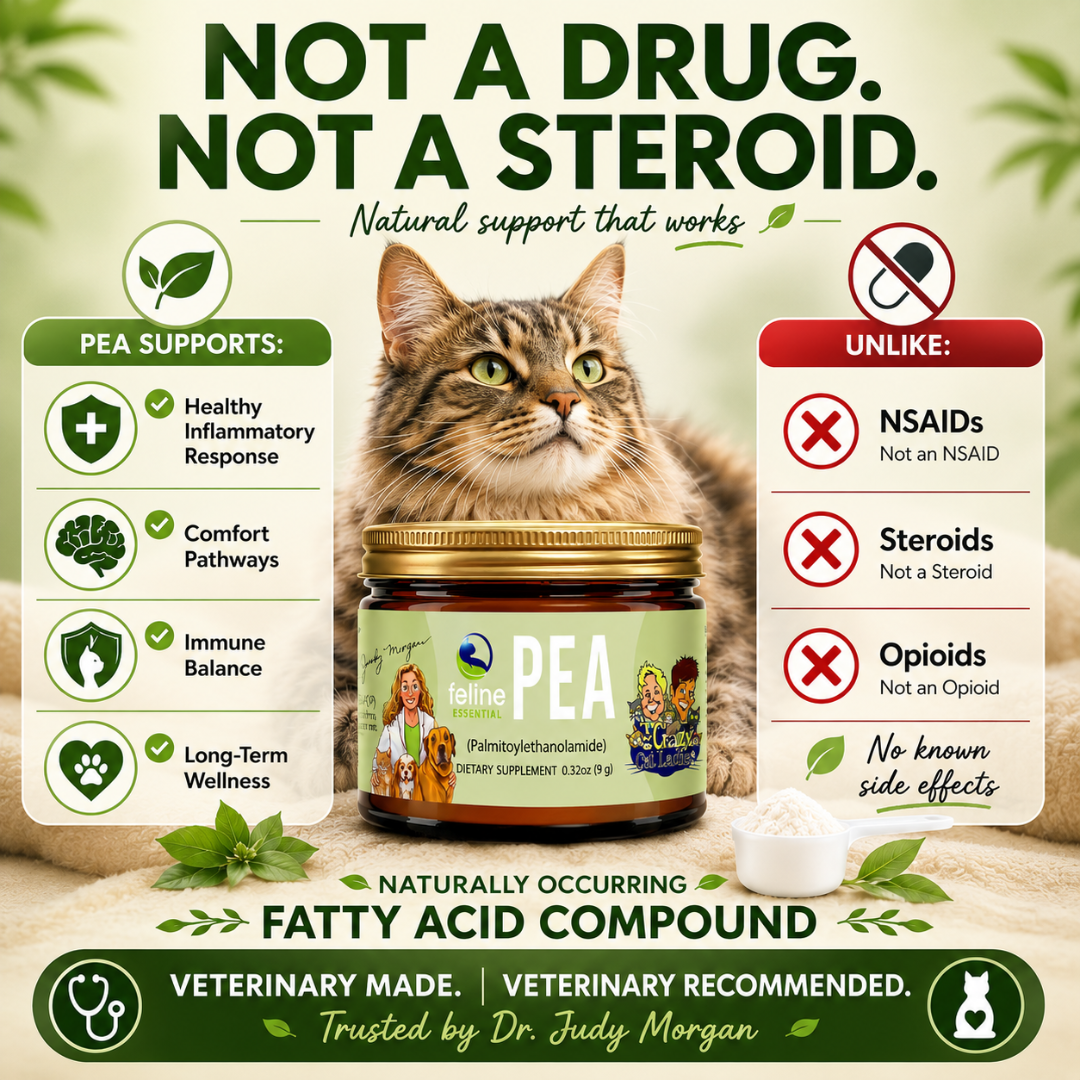
PEA isn’t an NSAID. It isn’t a steroid. It isn’t an opioid. And it doesn’t simply numb your cat or directly block pain signals.
Instead, it supports the body’s own mechanisms for maintaining a balanced inflammatory and nervous system response.
So, What Types of Pain Might PEA Help?
This is where it’s necessary to separate what makes biological sense from what has actually been studied.
PEA has been researched extensively for inflammatory and neuropathic pain, although much of the larger body of research comes from humans and experimental models. Veterinary researchers have also been investigating its use in dogs and cats.
A veterinary review of the research describes mast cells and microglia as important contributors to chronic pain and identifies them as targets of PEA’s activity. The available evidence suggests PEA may have a role in supporting animals experiencing chronic pain.
And now we’re getting more feline-specific research too.
Arthritis and Joint Pain
This is one area where we have some exciting feline-specific research.
In a randomized, double-blind, placebo-controlled clinical trial, 50 cats experiencing joint pain received either PEA or a placebo daily for six weeks.
Researchers evaluated the cats using the Feline Musculoskeletal Pain Index.
Cats receiving PEA demonstrated significant improvements in certain measures, including jumping up, jumping down and current pain scores.
That’s particularly meaningful because decreased jumping is one of the subtle ways arthritis and joint discomfort often show up in cats.
So, when we’re talking about arthritis, degenerative joint disease, chronic joint inflammation and mobility-related discomfort, PEA has some particularly relevant research behind it.
Feline Idiopathic Cystitis and Urinary Discomfort
Urinary discomfort is another fascinating area because feline idiopathic cystitis (FIC) isn’t simply a bladder problem.
Stress, inflammation and the nervous system are deeply interconnected in cats with FIC.
These cats can experience changes in the way the nervous system responds to stress, along with inflammation and changes within the bladder itself.
Because PEA helps regulate mast cells and neuroinflammatory signaling, researchers have investigated its potential role in cystitis and bladder pain.
This makes PEA especially interesting as part of a comprehensive approach for cats experiencing recurring inflammatory urinary discomfort.
And we want to emphasize comprehensive.
PEA isn’t going to remove bladder stones, resolve a urinary obstruction or cure a bacterial infection. A cat straining to urinate or unable to pass urine needs veterinary care immediately.
But when urinary discomfort involves chronic inflammation and stress-related nervous system activation, supporting those pathways is an important piece of the puzzle.
Nerve and Neuropathic Pain
PEA has also been widely studied for neuropathic pain, where nerves themselves become damaged, irritated or hypersensitive.
And this is where the relationship between inflammation and the nervous system becomes particularly important.
When pain continues for a long time, the nervous system can essentially become better at producing it. Signals can become amplified, inflammatory cells within and around the nervous system remain activated and a stimulus that normally wouldn’t be very painful can start to hurt much more.
This process is one reason PEA’s effects on neuroinflammation have attracted so much attention in pain research.
That doesn’t mean PEA treats every neurological or spinal condition.
It means that when neuroinflammation and pain sensitization are part of the problem, PEA’s mechanism may be particularly relevant.
Chronic Inflammatory Conditions
Remember those mast cells we mentioned earlier?
Researchers have actually demonstrated PEA’s effects on mast-cell activity in cats.
In a feline pilot study involving cats with eosinophilic granuloma and eosinophilic plaques, researchers reported clinical improvement in 10 of 15 cats (67%) following treatment with a PEA compound. They also documented changes consistent with decreased mast-cell degranulation (releasing fewer inflammatory chemicals).
While that wasn’t technically a pain study, it gives us feline-specific evidence supporting something important about PEA:
Its effects on inflammatory cells aren’t just theoretical.
That makes PEA particularly interesting when persistent inflammation is contributing to discomfort.
PEA Works Differently Than Traditional Pain Medication
This may be our favorite thing about PEA.
Traditional pain medications can be incredibly important and sometimes absolutely necessary.
But PEA takes a different approach. Instead of simply asking: How do we stop this cat from feeling pain? PEA research asks another question:
Can we help regulate some of the biological processes that are keeping inflammation and pain signaling switched on?
PEA works through multiple mechanisms, including modulation of mast cells, glial cells and other signaling pathways associated with inflammation and pain.
That’s why PEA is sometimes described as an autacoid, a locally produced compound the body makes to help maintain balance when tissues are stressed or injured.
The body already knows what PEA is.
We’re simply giving it more.
Pain, Inflammation and the Nervous System Are Connected
One of the biggest lessons we’ve learned from studying feline health is that we can’t look at the body’s systems in isolation.
Pain affects stress.
Stress affects the nervous system.
The nervous system communicates with the immune system.
The immune system influences inflammation.
And inflammation can make nerves increasingly sensitive to pain.
Round and round we go.
This becomes especially important when we’re dealing with chronic pain, because eventually the problem isn’t necessarily just the original injury or inflammation anymore.
The pain-processing system itself can change.
That’s why supporting the body’s ability to regulate inflammation AND nervous-system activity is so fascinating to us.
What About Injuries, Surgery and Other Types of Pain?
If your cat has a fractured bone, that fracture needs to be treated.
If your cat has an infected tooth, the tooth needs to be addressed.
If your cat has a urinary obstruction, that’s an emergency.
And if your cat just had surgery, adequate pain control is incredibly necessary.
PEA may be one tool within a larger pain-management strategy, particularly when inflammation or nervous-system sensitization is involved, but it doesn’t replace diagnosing and treating the reason your cat hurts.
Natural pain support should never mean allowing a cat to suffer.
Sometimes the most holistic thing you can do is give the medication your cat needs while also supporting the body in other ways. We aren’t anti-medication. We’re pro-cat.
How Can I Help My Cat’s Pain Naturally?
The best approach depends entirely on WHY your cat hurts.
Natural pain support may include feeding a moisture-rich, species-appropriate diet, helping your cat maintain a healthy weight, supporting healthy movement and muscle mass, reducing environmental stress and providing appropriate enrichment.
For cats with mobility issues, simple environmental changes can make a huge difference too. Ramps or steps to favorite sleeping spots, lower-entry litter boxes and easily accessible food and water can help a painful cat navigate everyday life more comfortably.
And when chronic inflammation or nervous-system sensitization is part of the picture, supplements such as PEA may offer another layer of support.
The goal isn’t simply to silence pain.
It’s to look at why the pain is happening and what the body needs to function better.
Could PEA Help Your Cat?
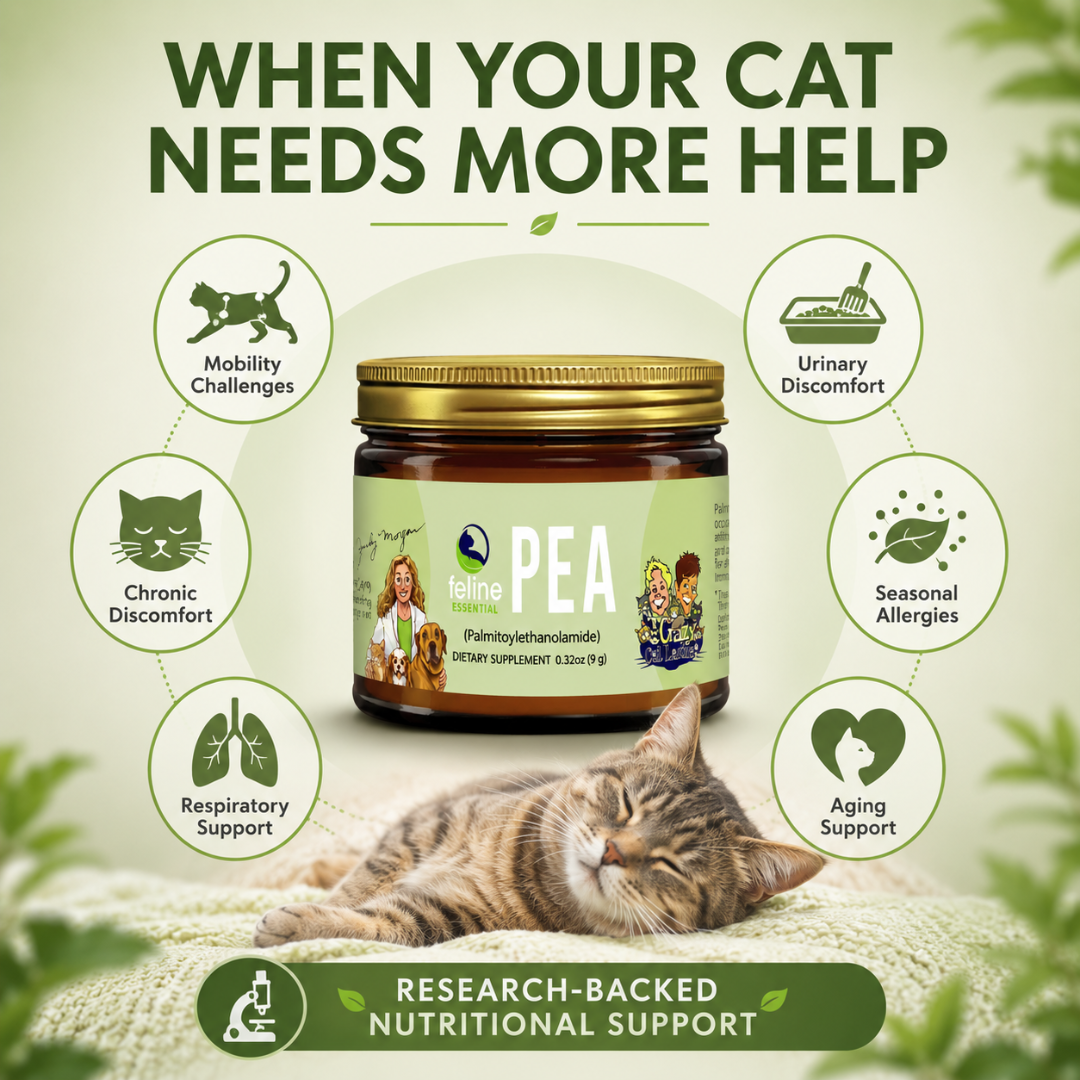
If your cat struggles with chronic discomfort, arthritis, inflammatory conditions (like FIC), recurring urinary discomfort or pain involving nervous-system sensitization, PEA is a valuable tool to explore.
What makes PEA especially interesting to us is that it isn’t simply trying to mask the message the body is sending. It helps support the body’s own response to inflammation, cellular stress and nervous-system activation.
And when you’re trying to improve the quality of life for a cat living with chronic discomfort, helping the body regain balance can be a pretty powerful place to start.



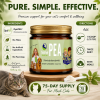
PEA for Cats
🔥 WAREHOUSE SALE: SAVE 30%! Discount automatically applied at checkout, no code needed. Best By March 2027, so please purchase only what your cat can reasonably use by then. Only while supplies last!
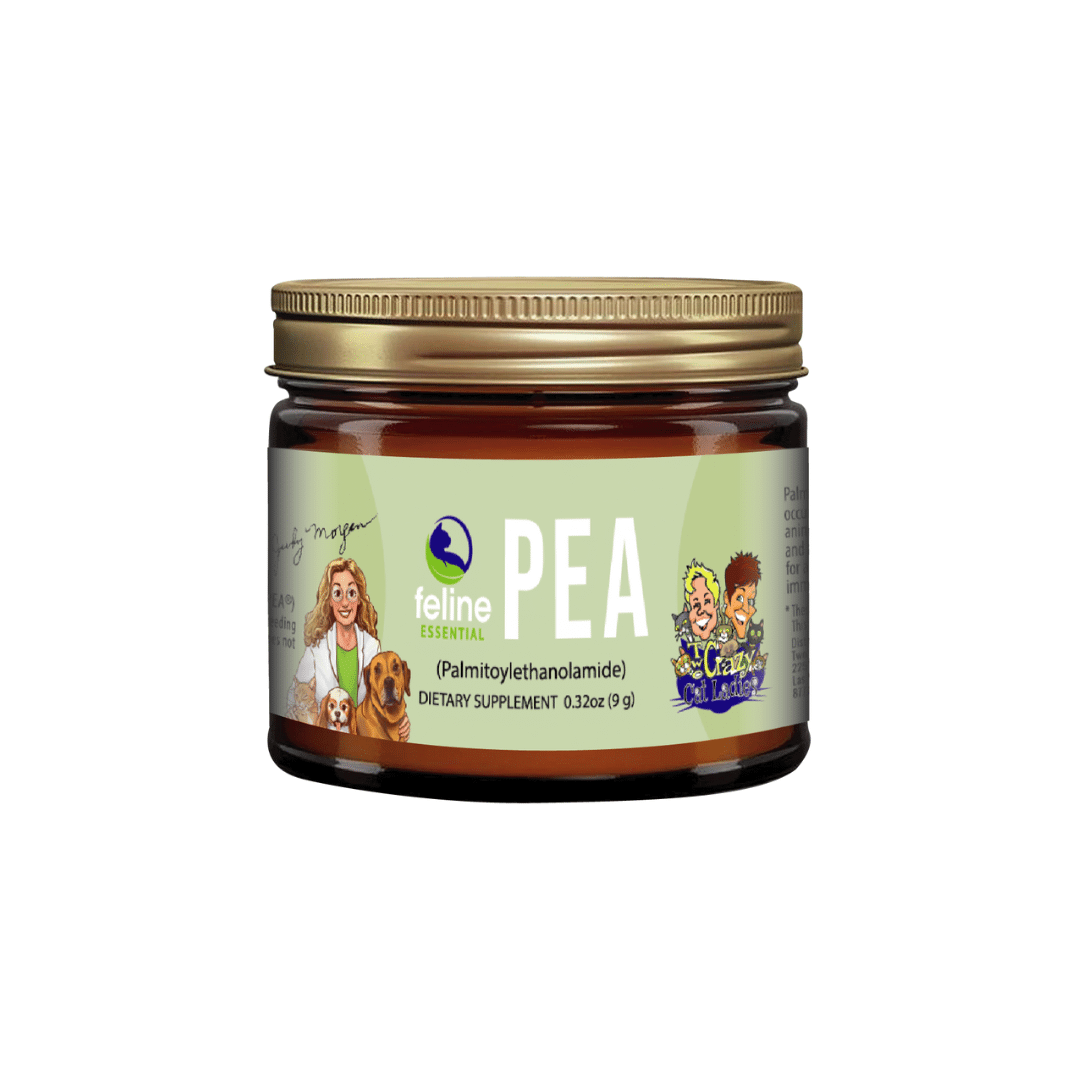
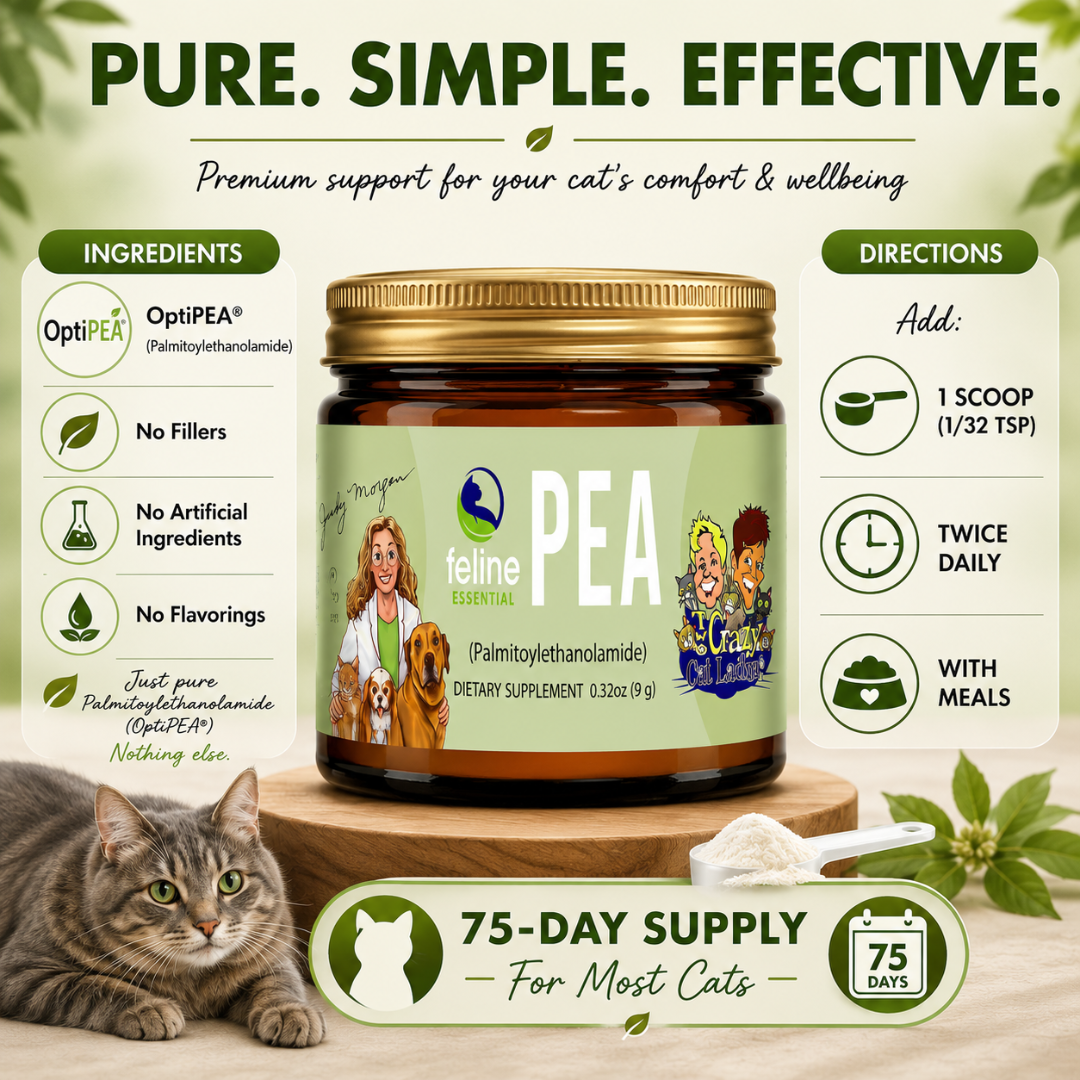
Palmitoylethanolamide, also known as PEA, is a naturally occurring fatty acid compound found in plants and animals. PEA works by supporting the function of glial (nerve) and mast (immune) cells in the body. A tiny amount of this wonder supplement can go a long way in bringing support to cats who struggle with ailments that other treatments just aren’t helping. Without any known side effects and a super easy addition to the food, this is a must have for cats!
Formulated in collaboration with award-winning integrative veterinarian Dr. Judy Morgan, whose four decades of clinical experience have helped thousands of pets around the world.
Areas of PEA research include:
- Chronic pain of various sources.
- Cystitis and chronic urinary tract disease.
- Allergies (itching and skin lesions).
- Mast cell tumors.
- Idiopathic pulmonary fibrosis.
PEA does not directly block pain signals the way opioids and analgesics do. It is not an NSAID, opioid, or steroid. Instead, it works with the body’s own natural systems to help support a healthy inflammatory response and promote long-term comfort.
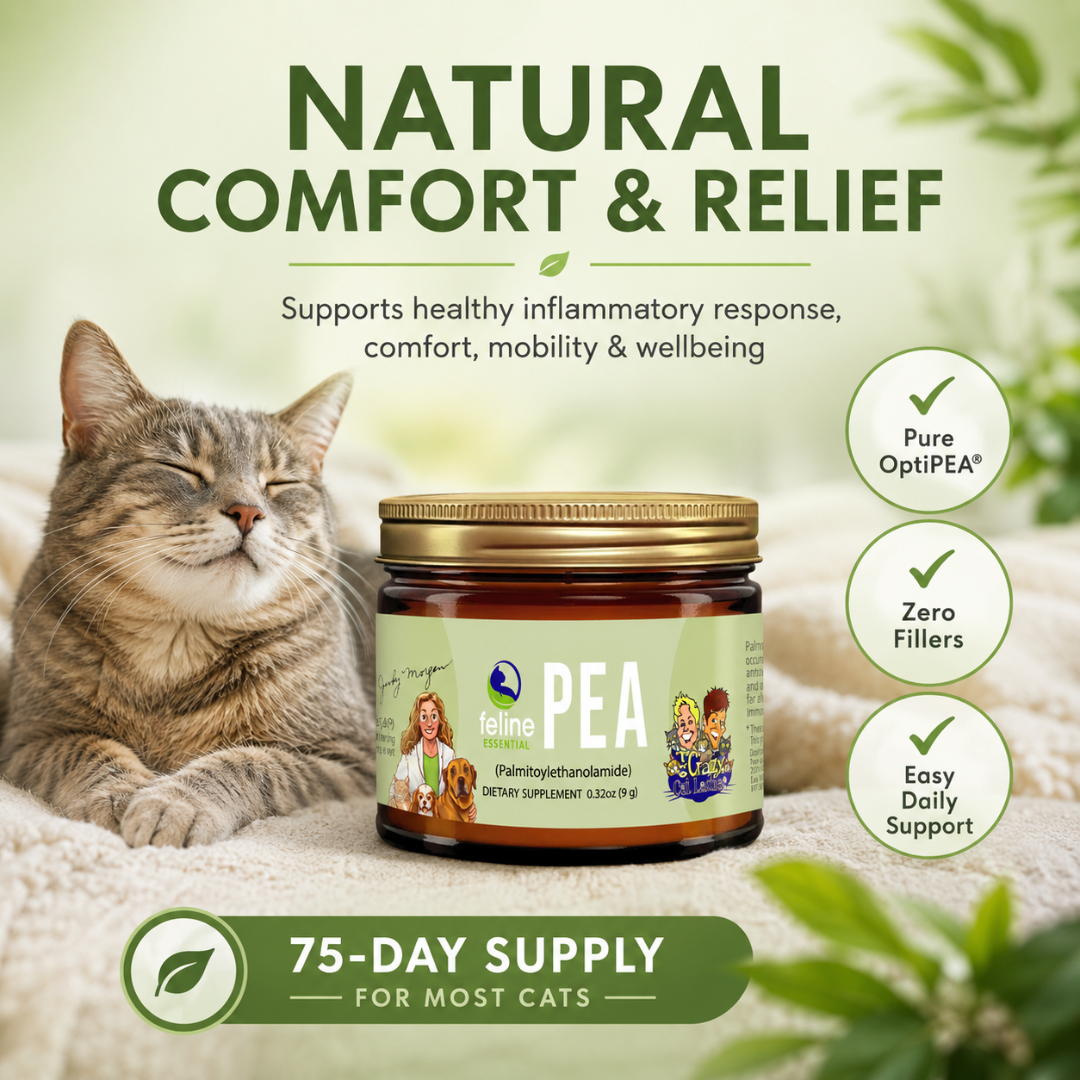
One bottle is a 75 day supply for most cats.
$29.99
In stock (can be backordered)






Recent Comments