

Updated 8/20/2026
Cats are notoriously poor drinkers. Unlike us, cats are designed to get most of their moisture from the food they eat, not from standing over a water bowl drinking all day.
So, how can you tell if your cat is dehydrated?
Common signs of dehydration in cats include dry or tacky gums, skin that is slow to spring back into place, low energy, reduced appetite, constipation, changes in urination, and, in more significant cases, sunken-looking eyes.
And because cats have a naturally low thirst drive, dehydration can sometimes sneak up on us.
Why Do Cats Get Dehydrated?
Cats evolved as desert animals and naturally have a low thirst drive. Their bodies are designed to get most of the hydration they need from their prey, which means they are essentially designed to eat their moisture.
This becomes important when we bring cats into our homes and feed them foods with very little moisture.
A moisture-rich diet more closely resembles the way cats are naturally designed to eat. Kibble, on the other hand, contains very little moisture. And because cats don’t necessarily compensate by drinking enough additional water, cats eating a dry diet can be at greater risk of dehydration.
Diet isn’t the only reason a cat can become dehydrated. Vomiting, diarrhea, fever, certain health conditions, increased fluid loss, or simply not eating or drinking enough can all contribute.
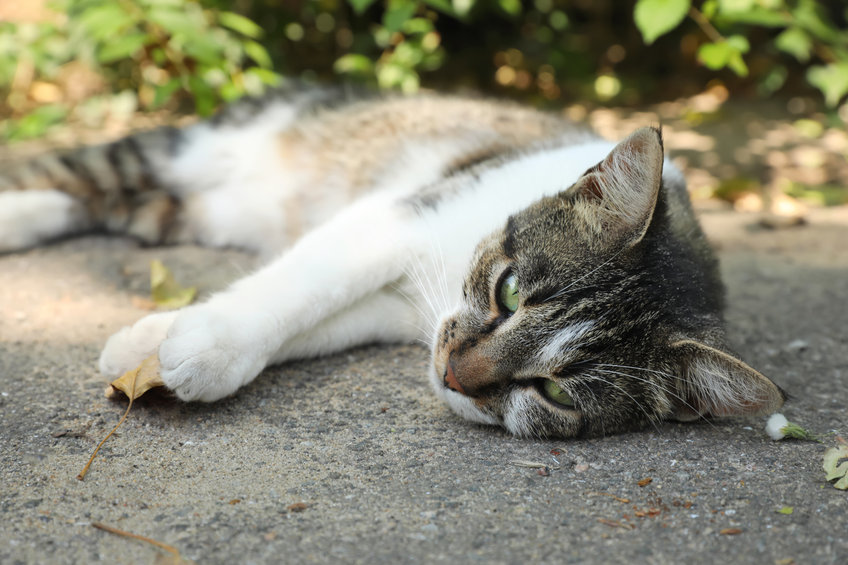
What Are the Signs of Dehydration in Cats?
Here are some of the most common signs to watch for:
- Dry or tacky gums. Healthy gums should normally feel moist and slippery rather than dry or sticky.
- Skin that doesn’t spring back quickly. When gently lifted, your cat’s skin should normally return to position fairly quickly. Skin that stays “tented” or slowly settles back down can be a sign of dehydration.
- Sunken-looking eyes. This can occur with more significant dehydration and should be taken seriously.
- Low energy, weakness, or lethargy. A dehydrated cat may seem more tired or less interested in normal activities.
- Reduced appetite. Dehydration can contribute to a poor appetite, and not eating can further reduce the amount of moisture your cat is taking in.
- Constipation or small, hard stools. When there isn’t enough water available in the body, the colon can pull more moisture from the stool, making it harder to pass.
- Changes in urination. Producing less urine than usual can be another sign that your cat isn’t getting enough fluid.
How Can You Check Your Cat for Dehydration at Home?
One quick check you can do at home is often called the skin tent test.
Gently lift a small amount of loose skin over your cat’s shoulder blades and let it go. In a well-hydrated cat, the skin should spring back into place quickly. If it stays tented or slowly returns to its normal position, your cat may be dehydrated.
However, this isn’t a perfect test.
The skin tent test can be less reliable in senior cats, very thin cats, and overweight cats because age and body condition can affect skin elasticity. That’s why it’s important to look at the whole cat, including their gums, appetite, energy, litter box habits, and normal behavior.
If you suspect your cat is significantly dehydrated, especially if they are lethargic, weak, not eating, vomiting, having diarrhea, or showing other concerning symptoms, contact your veterinarian. Significant dehydration may require medical treatment and fluid therapy.
How Can You Help Keep Your Cat Hydrated?
One of the easiest ways to support hydration is to put more moisture into the food instead of relying on your cat to drink more water.
If kibble is the best you can do, we totally understand. A fed cat is always better than the alternative. But there are still ways to increase the amount of moisture your cat gets each day.
You can try adding water to their meals or incorporating things like Cat Years Hydration Boosters, pet-safe bone broth, wet food, or even some fresh food into their diet.
And, yes, keep fresh water available too! Some cats prefer fountains, wide bowls, multiple water stations, and water bowls placed away from their food.
The goal isn’t necessarily to convince your cat to become a champion water drinker. It’s to work with their biology and find ways to increase their total moisture intake throughout the day.
The Bottom Line
Cats aren’t naturally big water drinkers because they were designed to get much of their hydration from food. That’s why paying attention to both what your cat eats and how much moisture they consume is so important.
Watch for signs like dry or tacky gums, slow skin return, constipation, decreased urination, reduced appetite, lethargy, or sunken-looking eyes. And remember that you know your cat’s normal better than anyone. Changes in their eating, energy, bathroom habits, or behavior are always worth paying attention to.
We are in total control of these little felines we brought into our lives and homes, and it’s up to us to make sure they’re getting what they need to thrive.
And hydration is a very important part of that!
Recommended Product for Your Cat