

Updated 7/8/2026
If you’ve ever been licked by your cat, you know exactly what we’re talking about.
It feels a little like a tiny sheet of sandpaper!
As strange as it may seem, your cat’s rough tongue is actually one of nature’s most amazing designs.
Tiny Hooks With a Big Job
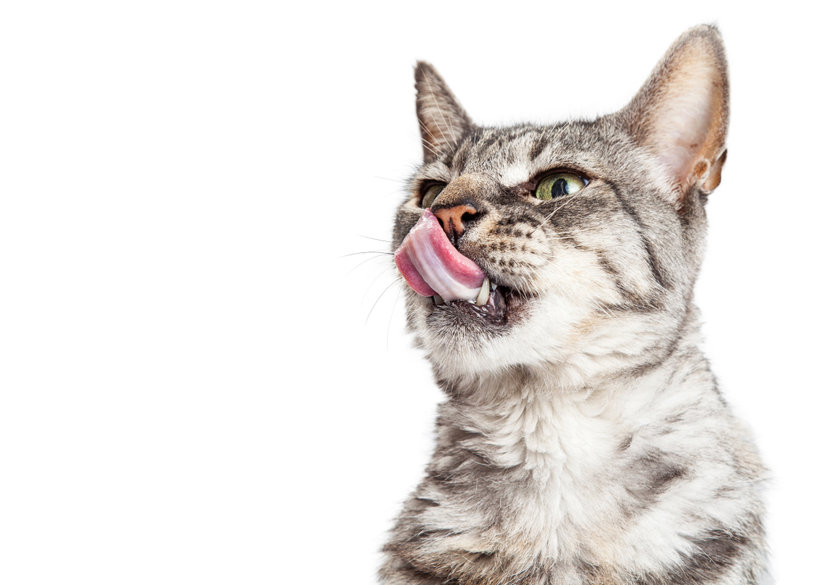
A cat’s tongue is covered in hundreds of tiny, backward-facing spines called papillae. These little hooks are made of keratin, the same material found in your cat’s claws and even our fingernails.
While they may feel rough on your skin, they serve several very important purposes.
The World’s Best Hairbrush
Those tiny hooks work like a built-in grooming brush.
As your cat licks, the papillae reach deep into the fur to remove loose hair, dirt, debris, and even tiny parasites. They also help spread your cat’s natural skin oils throughout the coat, keeping the fur clean, healthy, and more water resistant.
Researchers have even created 3D models of cat tongues to better understand how efficiently they groom themselves. It turns out they’re much better at detangling fur than many of our own hairbrushes!
Grooming Is About More Than Looking Good
Cats spend a huge portion of their waking hours grooming, but it isn’t just because they like being clean.
As natural predators, cats rely on stealth. Grooming helps remove scents that could alert prey to their presence. It also helps them regulate their temperature, distribute protective oils, and strengthen social bonds when cats groom one another.
When your cat grooms you, it’s often a sign of trust and affection. They’re treating you like family.
Why Brushing Matters
Those tiny hooks are incredibly effective at catching loose fur.
The downside is that the fur can only move in one direction, toward the back of the throat. While much of it passes safely through the digestive tract, some can collect into the occasional hairball.
One of the easiest ways to help reduce hairballs is by brushing your cat regularly. By removing loose fur before your cat has the chance to swallow it, you’re helping support healthy digestion while also reducing the amount of hair that ends up on your furniture and clothes.
Built for Hunting
A cat’s tongue doesn’t just help with grooming. It also plays an important role during mealtime.
Those tiny backward-facing papillae act like hundreds of little hooks that help grip and scrape meat from bones. In the wild, this allows cats to make the most of every meal by removing as much meat as possible from their prey.
Even though our house cats may not be hunting for dinner, they still have the same incredible tongue designed by nature thousands of years ago.
Nature’s Perfect Design
From grooming and hunting to bonding and staying healthy, your cat’s rough tongue is a perfect example of how every part of their body is beautifully designed for the life of an obligate carnivore.
So the next time your cat gives you a sandpaper kiss, remember…
It’s one of the greatest compliments they can give.